The Journal · South Africa
Kimberley and the Big Hole
In 1871 a hill on a farm in the Northern Cape gave up diamonds. Within a few years it had become one of the largest holes ever dug by hand.
South Africa’s diamond story begins with a pebble. In 1867 a bright stone picked up near Hopetown was identified as a diamond of more than twenty-one carats, now known as the Eureka. Two years later a much larger stone, the Star of South Africa, followed.
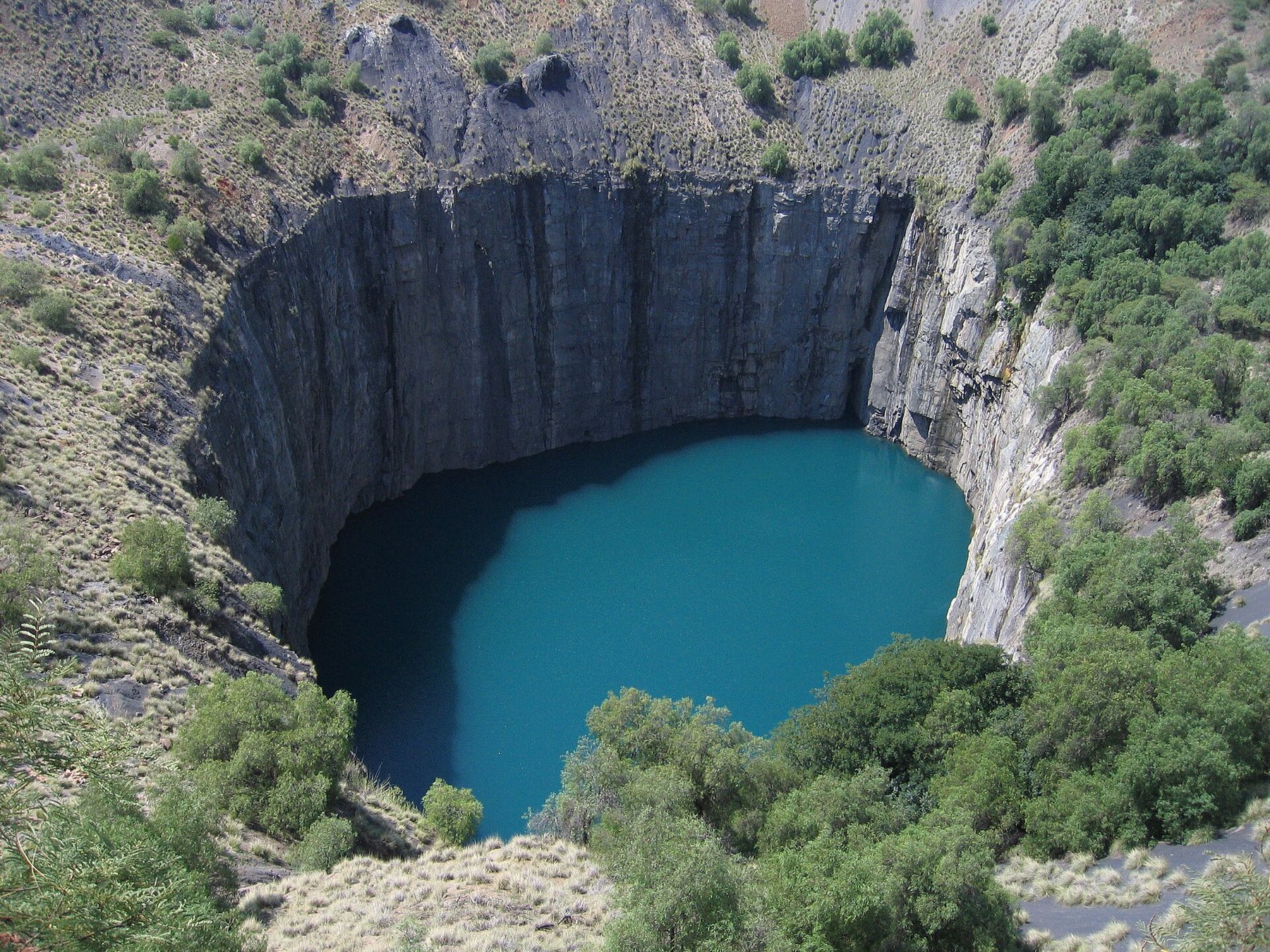
In 1871 diamonds were found on a low hill on a farm called Vooruitzigt, owned by the De Beer brothers. News travelled fast. Thousands of diggers arrived, and the hill, which the diggers called the New Rush, was dug away by hand.
A town built on a mine
The tent town became Kimberley, named in 1873 after the British Colonial Secretary, Lord Kimberley. Diggers worked small claims with picks and shovels, hauling the ground up by rope and bucket. Between 1871 and 1914, the mine yielded about 14.5 million carats.
What remains is the Big Hole, a crater more than two hundred metres deep, now holding water. In 1888 Cecil Rhodes consolidated the claims into De Beers Consolidated Mines, and a handful of scattered diggers became one of the largest companies in the world.
Origin matters. Every stone that we supply has a starting place that can be pointed to.